Tennessee Hair Braider
Braiders Registration: 16hr Career, Health, Safety, Sanitation
Hair Braider Definition:
A person who uses techniques that result in tension on hair strands, such as twisting, wrapping, weaving, extending, locking, or braiding of the hair, by hand or mechanical appliances for compensation, without cutting, coloring, relaxing, removing, chemically treating, or using other preparations to straighten, curl, or alter the structure of the hair.
Licensing Requirements
Must be at least 14 years of age
Education Requirements
Attend sixteen (16) hours of training in health and hygiene, either in person or online, as approved by the commissioner, receive a certificate indicating attendance from the training, attest to the one-time training at biennial registration, and retain and display the certificate on request.
Governor Bill Lee signed into law Senate Bill 1185, which reduces the requirements needed to provide natural hair braiding. As per the Board of Cosmetology and Barber Examiners website, the law now only requires Hair Braiders to meet the following requirements:
- Obtain 16 Hours of training in health and hygiene, wellness, and more in person or online;
- Register biennially and pay a $30.00 registration fee by going to www.core.tn.gov on or after July 1, 2019;
- Use only disposable or properly sanitized instruments; and
- Post a notice that the Hair Braider is not licensed and refrain from referring to oneself as a natural hair stylist.
- Licensure is still required for Natural Hair Styling
Course Curriculum

Career as a Hair Braider
What does a Hair Braider do?
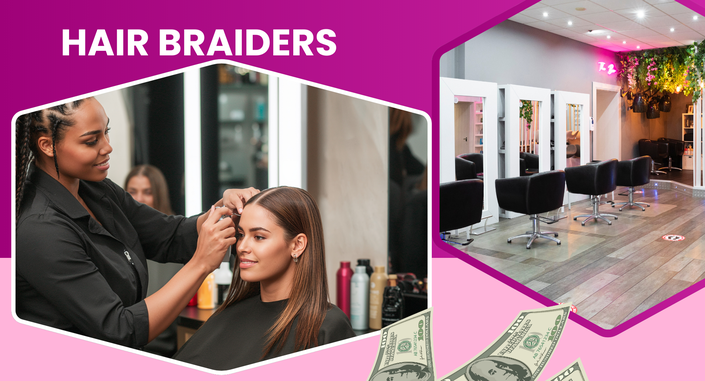
Hair braiding involves intricately twisting, pulling, shaping, and braiding hair, and it is particularly popular amongst African-Americans and African immigrants. A hair braider is a beauty professional who specializes in the art of twisting, braiding, and tying many small braids all over the head.
Health & Hygiene
Personal hygiene is keeping the body clean, and helps prevent the spread of germs. Grooming is caring for fingernails and hair examples of these activities would be Styling hair, shaving, trimming and painting fingernails. Feeling and looking good are important to each individual's emotional and physical well being.


Safety and Sanitation
Sanitation is simply cleaning by removing all visible dirt and debris. By cleaning a surface properly, the number of germs is reduced, as is the risk of infection. ... Examples of sanitation include washing your hands or applying antiseptic (hand sanitizer) to your hands.